Animal Kingdom is Walt Disney World's most unexpectedly spectacular park — a place where a giraffe strolls past your safari truck, a bioluminescent alien world materializes after dark, and the Tree of Life watches over everything like a 145-foot carved sentinel. It's the only Disney park where the wildlife is real, the botanical gardens rival dedicated arboretums, and slowing down genuinely rewards you. This guide covers everything for 2026, including the latest on what's replacing the former DinoLand USA.
🌿 Fast Fact: The Tree of Life took three years to build and contains 325 animal carvings worked into its bark. On a slow morning, you can spot all of them — if you have the patience and the neck strength.
Pandora — The World of Avatar
Pandora is Animal Kingdom's crown jewel — a fully immersive alien landscape built from the ground up with floating mountains, bioluminescent plants, and Na'vi architecture that makes you feel like you've stepped through a portal into another world. At night, the entire land glows. Yes, actually glows.
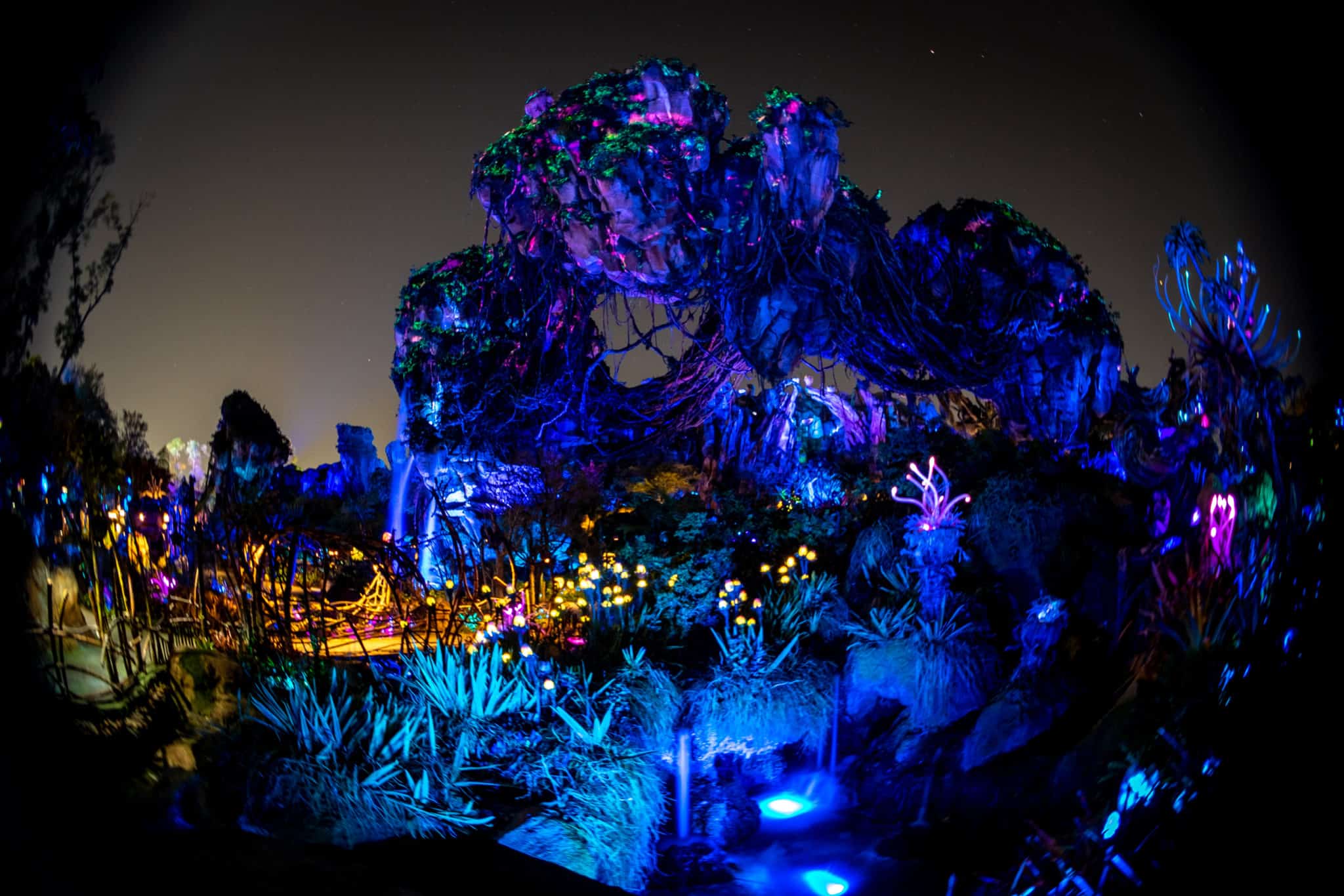
Pandora transforms after dark — every surface glows with bioluminescent life.
Avatar: Flight of Passage — Disney's Most Spectacular Ride
Avatar: Flight of Passage is, by most measures, the most visually stunning attraction Disney has ever built. You're strapped onto a banshee — a Na'vi flying mount — and sent soaring over Pandora's oceans, through its bioluminescent forests, and across its floating mountains in jaw-dropping 3D. The scale is enormous. The detail is otherworldly. Even guests who haven't seen Avatar are usually speechless by the end.
Expect 90–120 minute standby waits on most days. Lightning Lane Individual is available and genuinely worth purchasing here — it's that good. Rope drop is your best free option: be at the park gates 30 minutes before opening and walk immediately to Pandora.
💡 Motion Sensitivity: Flight of Passage is a motion simulator and can be intense. If you're prone to motion sickness, know that stationary seating is available — just ask a cast member. You lose some of the kinetic sensation but the visuals are still extraordinary.
Na'vi River Journey
Na'vi River Journey is the gentle counterpart to Flight of Passage — a slow, peaceful boat ride through glowing Pandoran jungle. It's one of the most beautiful dark rides Disney has ever created, and the Shaman of Songs animatronic at the end is genuinely one of the most sophisticated Audio-Animatronics in any Disney park worldwide. Tip: the queue itself is stunning, so don't rush through it.
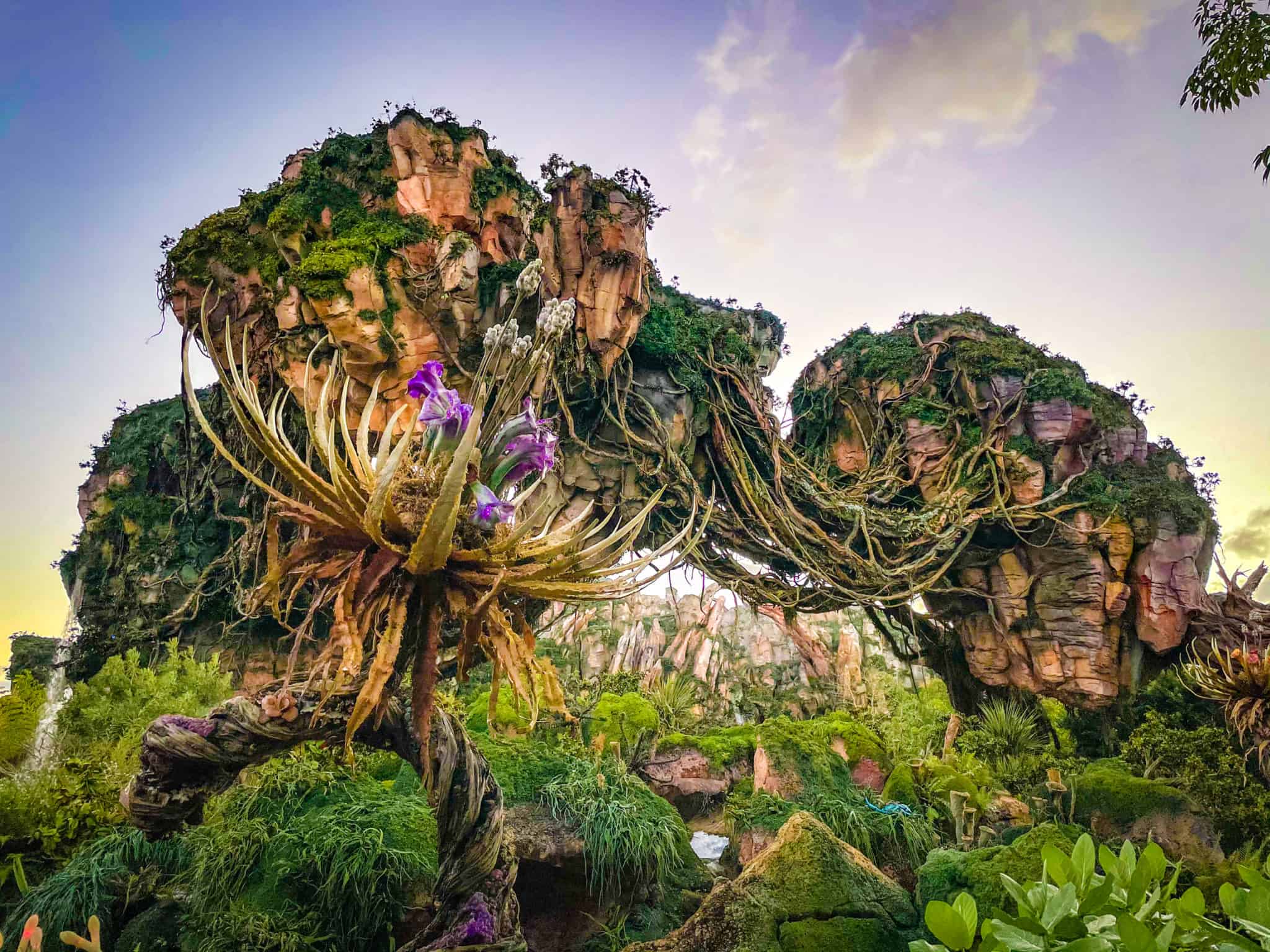
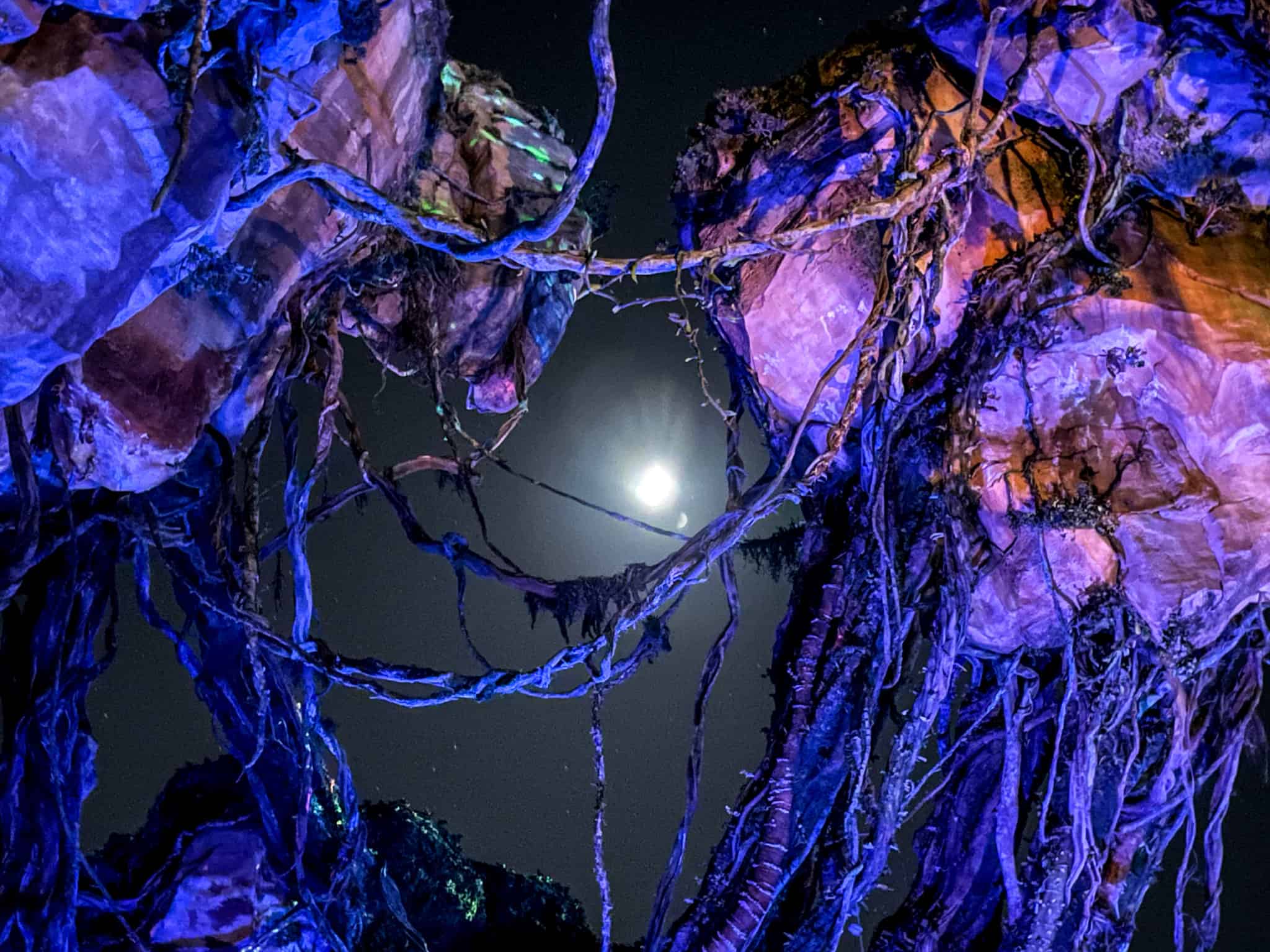
Pandora by day and by night — the floating mountains are extraordinary either way.
🎨 Did You Know? Pandora's glowing plants aren't a projection trick — they're actually bioluminescent-effect ground lighting built directly into the pavement and plant structures. The designers embedded thousands of individual light points into the landscape.
Kilimanjaro Safaris — Where the Wildlife is Real
Kilimanjaro Safaris is the attraction that makes Animal Kingdom unlike anywhere else at Disney World. You ride an open-air truck through 110 acres of naturalistic African habitat and watch real giraffes, elephants, zebras, lions, rhinos, hippos, flamingos, and more roam in genuinely expansive spaces. It's not a zoo. It's something closer to an actual savanna.
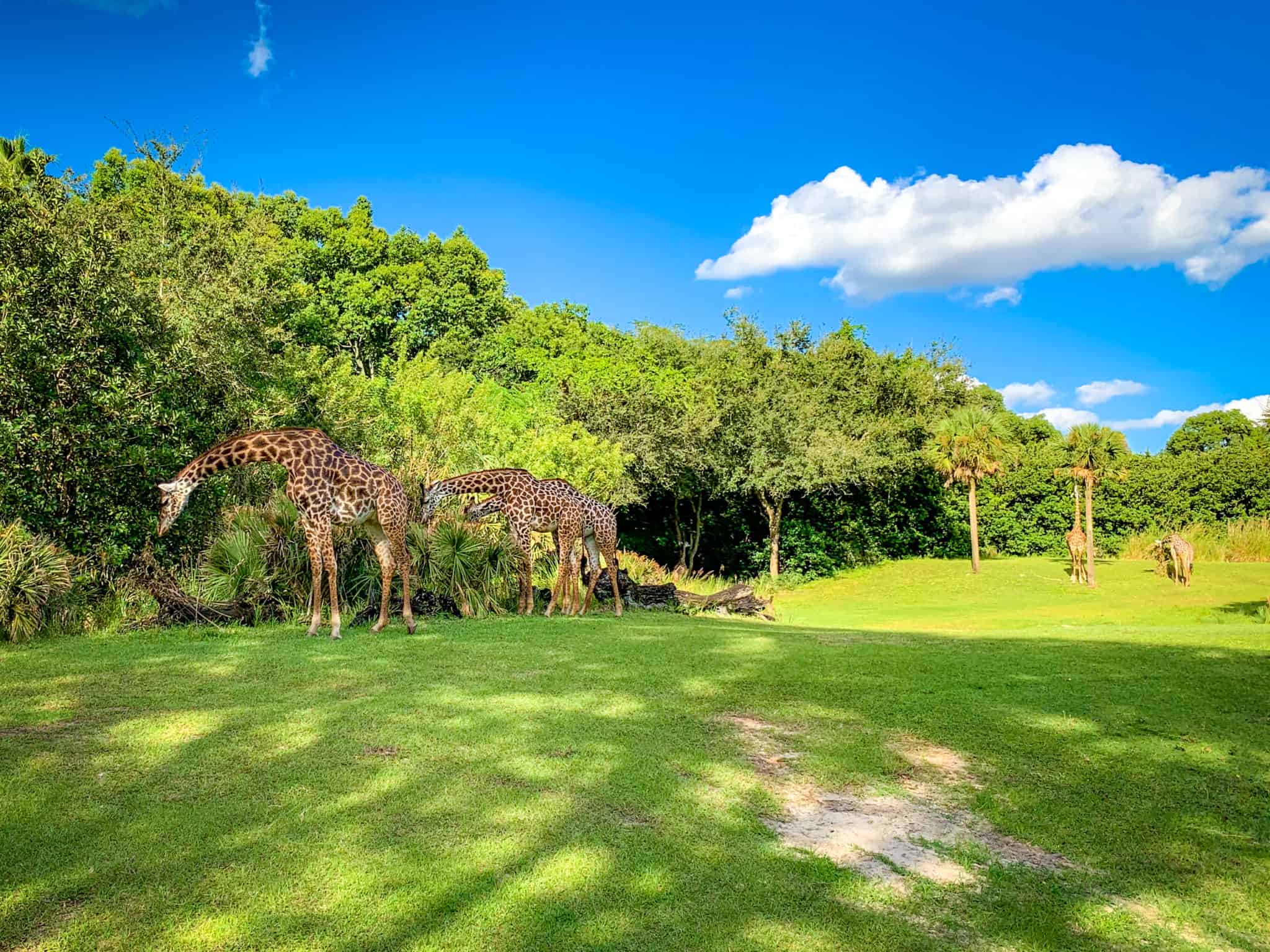
The giraffes at Kilimanjaro Safaris have approximately 110 acres to roam. They use all of it.
Best Times to See the Most Animals
Animals are most active in the early morning (first hour of opening) and late afternoon (after 3pm), particularly during Florida's warmer months when midday heat drives them to shade. A morning safari is the gold standard, but late afternoon runs have their own magic — golden light, active animals, and a surprisingly contemplative mood.
The route varies seasonally, and some animals rotate locations based on breeding programs and habitat rotation. No two safaris are identical, which is part of what makes repeat rides so worthwhile.
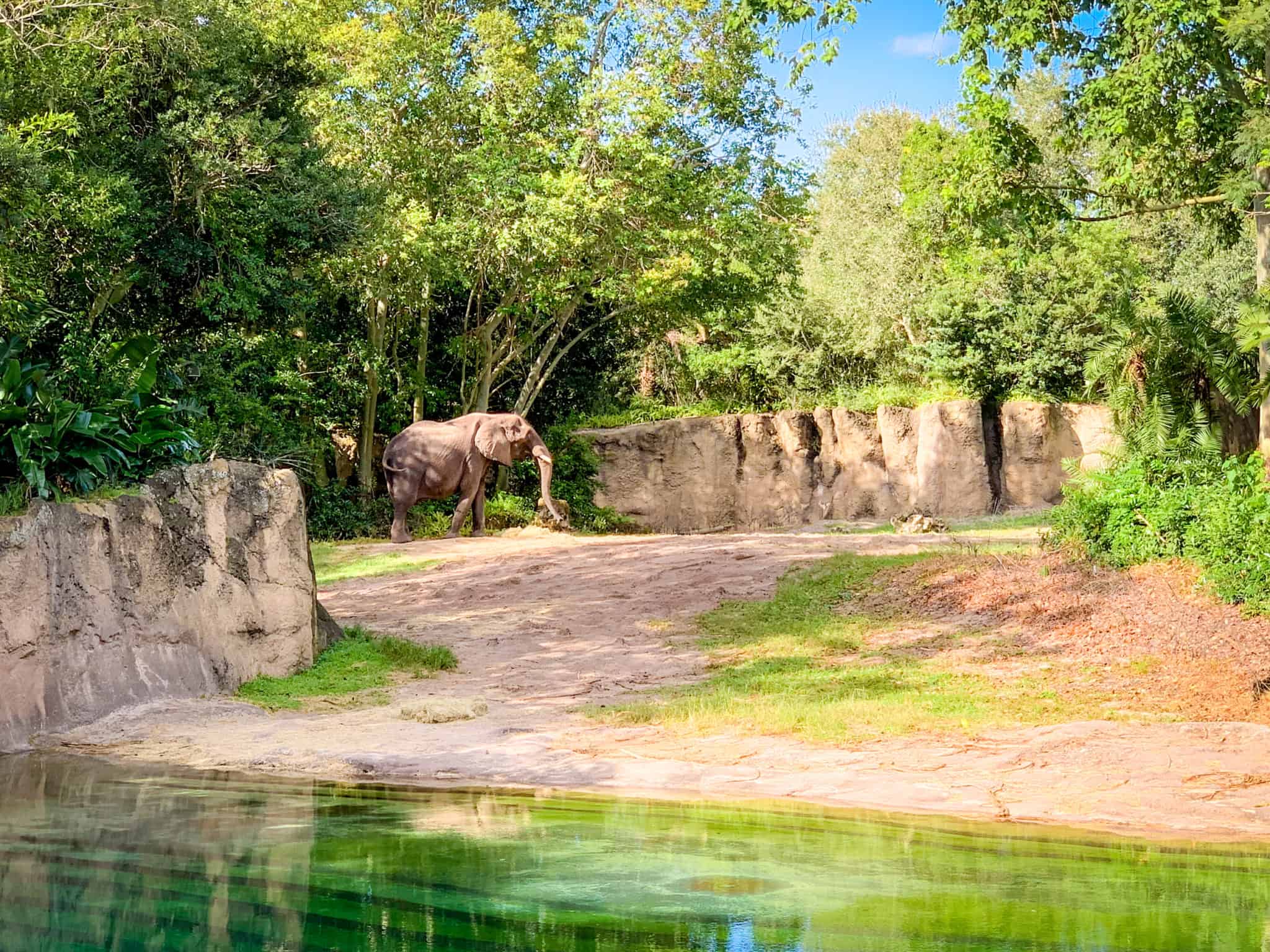
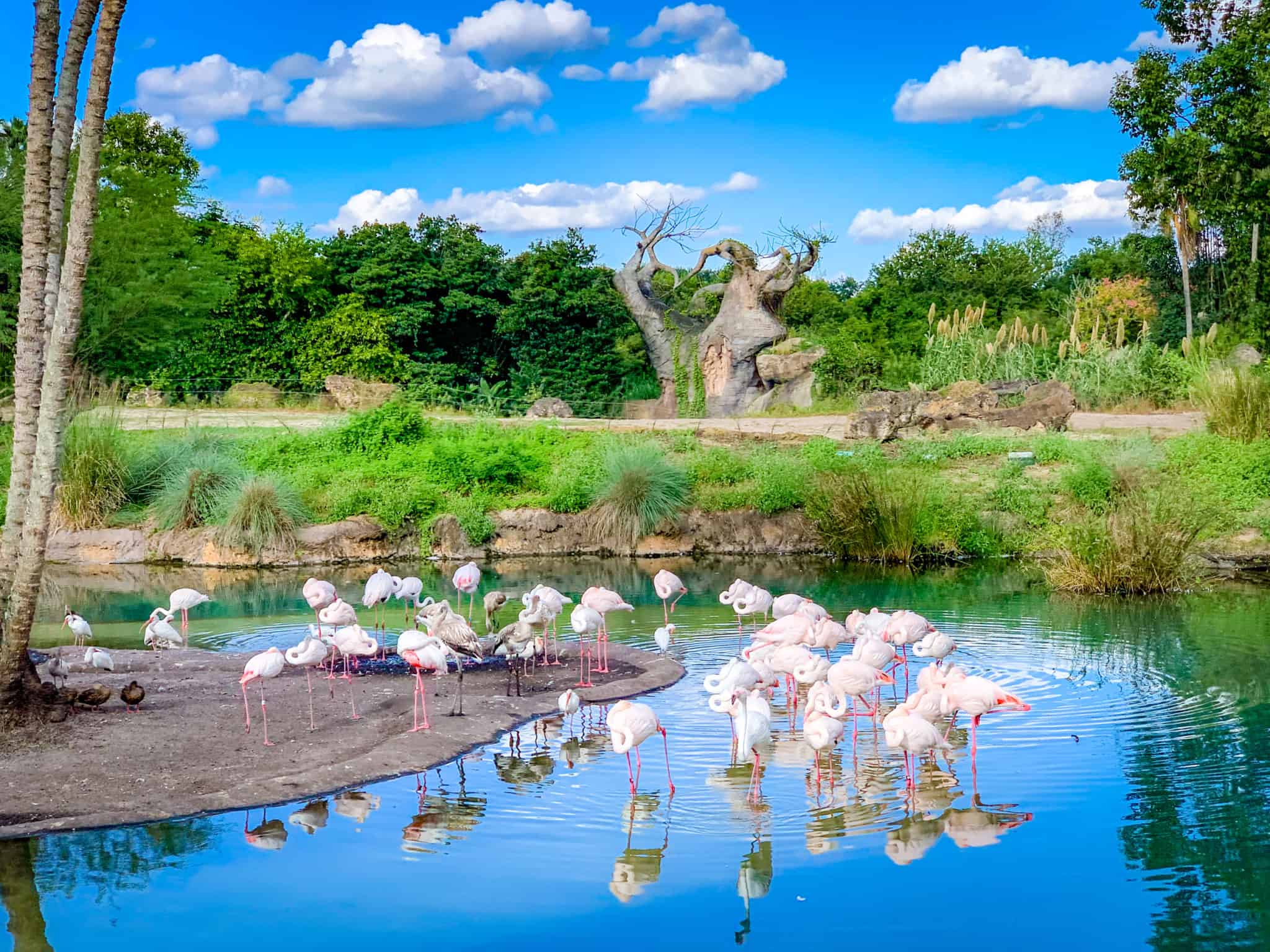
Elephants, flamingos, giraffes — the wildlife variety changes every single ride.
💡 Pro Tip: Sit on the right side of the truck if you can — the first major animal section (savanna with giraffes and zebras) is best viewed from the right. Switch to left for the elephant habitat.
The Lands of Animal Kingdom
🌳 Discovery Island — The Heart of the Park
Everything radiates from Discovery Island, anchored by the iconic Tree of Life. The tree is more than a landmark — it's an art installation, a habitat (over 200 animal species nest in and around it), and an experience. Walk the full path around its base slowly: the 325 carvings include a mouse, a polar bear, a mandrill, and a blue whale, among hundreds of others.
Inside the tree, It's Tough to be a Bug! is a charming 4D film experience featuring characters from A Bug's Life. It's family-friendly, air-conditioned, and genuinely funny — even if it startles the youngest guests with a few tactile surprises.
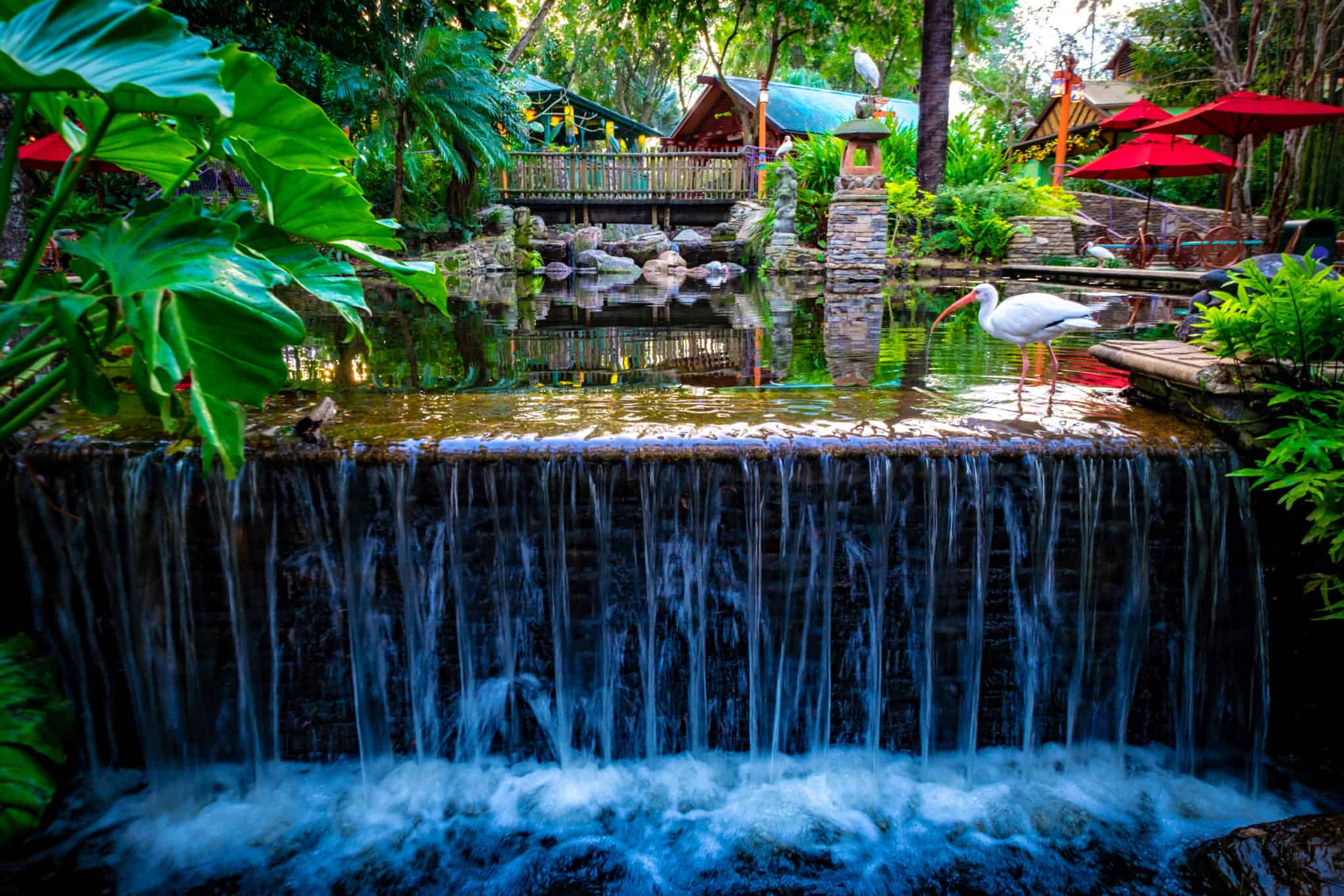
Animal Kingdom's immersive environments reward slow exploration — every corner has a story.
🌍 Africa — Harambe Village & The Safari
Africa is where you'll find Kilimanjaro Safaris and the vibrant Harambe Village marketplace — a carefully researched recreation of an East African village with authentic architecture, artisan goods, and street food vendors. The atmosphere rewards slow walking: the storytelling is in the details, from the bulletin boards to the architecture to the soundtrack playing from the "village radio."
Gorilla Falls Exploration Trail is a walk-through trail showcasing gorillas, hippos, meerkats, and African birds in stunning naturalistic habitats. It's one of the most underrated experiences in the entire park and almost never crowded.
🏔️ Asia — Everest, Rapids & Ancient Temples
Expedition Everest is Animal Kingdom's premier thrill ride — a high-speed coaster through intricately detailed Himalayan temples that eventually reverses direction in the dark before a face-to-face encounter with the Yeti. The queue alone is a masterpiece: three rooms of authentic Himalayan artifacts, expedition gear, and warnings about the forbidden mountain. Take your time in it.
Kali River Rapids is a round-raft water ride that makes a serious environmental statement about deforestation while also absolutely soaking you. On a hot Florida day, that's a feature, not a bug. Plan accordingly — either embrace getting drenched or wear a poncho.
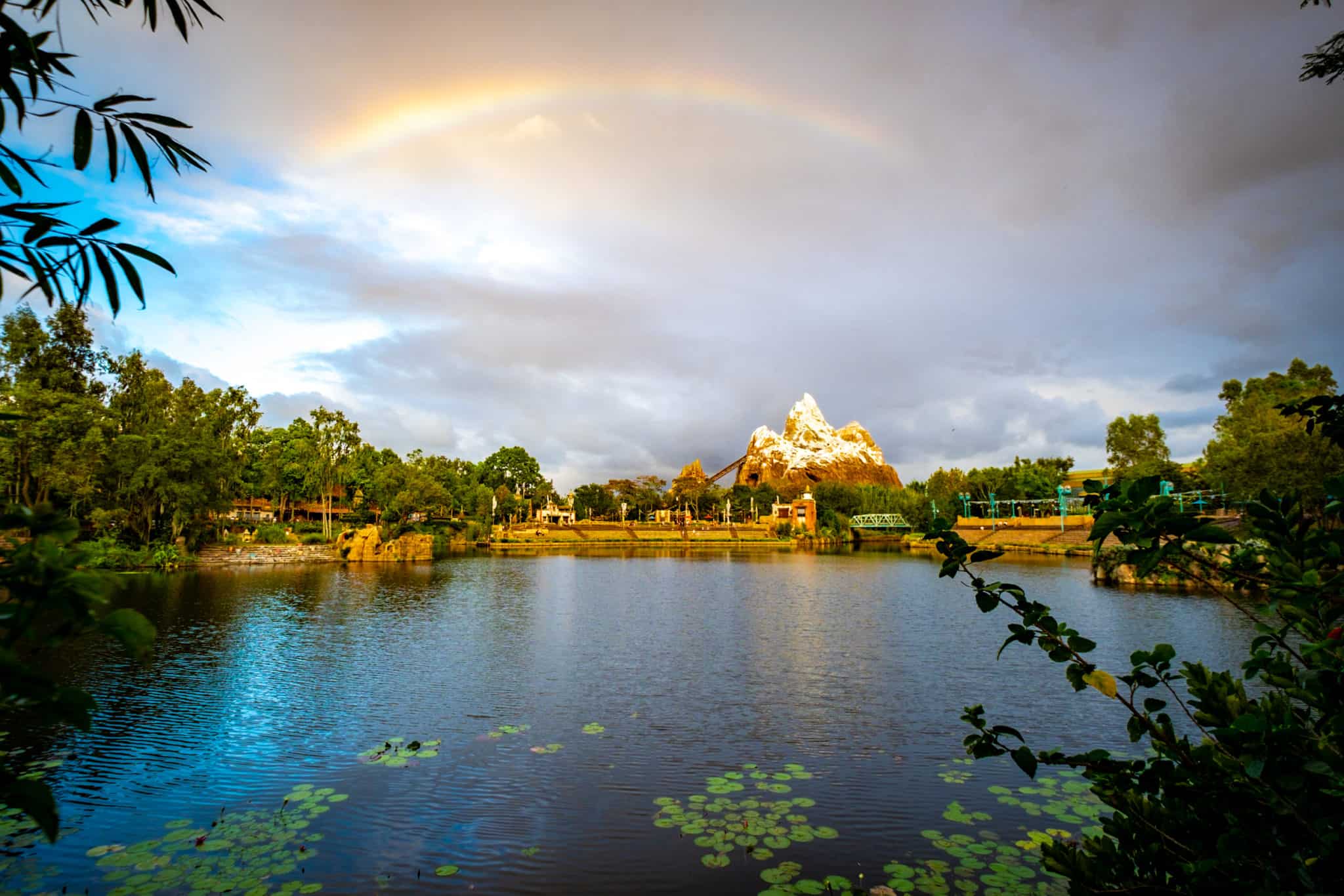
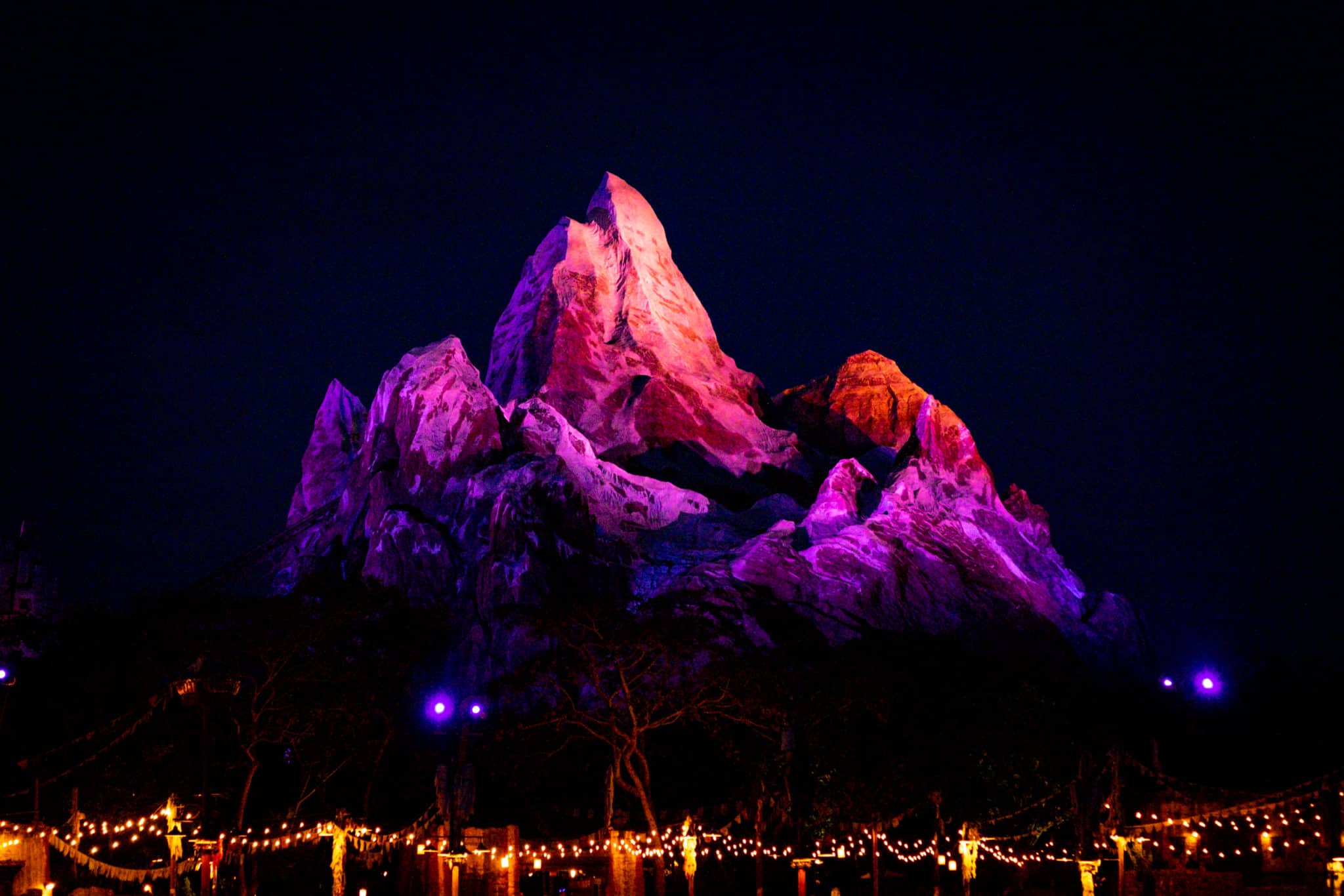
Expedition Everest: legendary by day, genuinely eerie at night.
🏔️ Fun Fact: The Yeti animatronic inside Expedition Everest is the largest and most expensive Audio-Animatronic Disney has ever built — 25 feet tall and weighing over 15,000 lbs. Due to ongoing maintenance challenges, it currently operates in "B-mode" (strobe lighting effect). Disney fans have been campaigning for a full repair for years. The debate rages on.
🦖 Former DinoLand USA → Tropical Americas (Coming Soon)
🚧 2026 Update: Area Under Transformation
DinoLand USA — the park's former carnival-themed dinosaur land — has closed and is actively being reimagined as Tropical Americas, an exciting new themed land celebrating the wildlife, mythology, and landscapes of Central and South America. The DINOSAUR attraction has closed, and the former carnival games area is gone.
The new land is expected to bring a major new attraction themed around an iconic adventure franchise, alongside lush new environments and dining. Check back as construction progresses — this will be a significant addition to the park when it opens.
DinoLand USA — the park's former carnival-themed dinosaur land — has closed and is actively being reimagined as Tropical Americas, an exciting new themed land celebrating the wildlife, mythology, and landscapes of Central and South America. The DINOSAUR attraction has closed, and the former carnival games area is gone.
The new land is expected to bring a major new attraction themed around an iconic adventure franchise, alongside lush new environments and dining. Check back as construction progresses — this will be a significant addition to the park when it opens.
🐾 Rafiki's Planet Watch — The Hidden Animal Encounter
A short wildlife-themed train ride (the Wildlife Express Train) carries you to Rafiki's Planet Watch — a conservation station where you can interact with veterinarians and animal caretakers, see behind-the-scenes animal care, and meet some of the park's smaller animal ambassadors up close. It's one of the most genuinely educational experiences at Walt Disney World and usually very low crowds. Kids who love animals often rank it as their favorite part of the day.
Best Attractions Ranked — 2026
Here's where every major Animal Kingdom attraction sits, ranked by overall experience:
#1
Avatar: Flight of Passage
📍 Pandora
Disney's most visually spectacular attraction. 3D flying simulator soaring over alien landscapes. Unmissable — even for guests who haven't seen Avatar. 44" height requirement.
🏆 Must-Do
Lightning Lane Individual
90–120 min typical wait
#2
Kilimanjaro Safaris
📍 Africa
Open-air safari with real African wildlife across 110 acres. No height requirement. Best ridden at rope drop or after 3pm for peak animal activity. Duration: 22 minutes.
🏆 Must-Do
45–75 min typical wait
No height requirement
#3
Expedition Everest
📍 Asia
High-speed coaster through Himalayan temples with a Yeti encounter. The best thrill ride in the park. 44" height requirement. The queue is genuinely worth experiencing slowly.
🏆 Must-Do
Lightning Lane Multi-Pass
45–70 min typical wait
#4
Na'vi River Journey
📍 Pandora
Serene dark ride through glowing bioluminescent jungle. Family-friendly, no height requirement. The Shaman of Songs animatronic is one of the most advanced Disney has built.
30–55 min typical wait
No height requirement
All ages
#5
Kali River Rapids
📍 Asia
Water raft ride through rainforest and logging destruction. You will get wet. Possibly completely soaked. 38" height requirement. Best on hot days (not so great in December).
25–50 min typical wait
38" height req.
🌊 Bring a poncho
#6
It's Tough to be a Bug!
📍 Discovery Island — Tree of Life
4D film with Bug's Life characters. Inside the Tree of Life. Air-conditioned, family-friendly, and genuinely funny. Some young children find it surprising — the seats have tactile effects.
10–25 min typical wait
No height requirement
❄️ Air-conditioned
Dining Highlights
Animal Kingdom punches well above its weight class for food. Tiffins Restaurant is legitimately Disney's most globally-inspired fine dining — think slow-roasted fish, duck confit, and cocktails served in a gallery of original Imagineering artwork. Tusker House delivers an excellent African-cuisine character dining experience with Donald and friends in safari gear. And Satu'li Canteen in Pandora ranks as one of the best quick service options in all of Walt Disney World.
For snacks, the Night Blossom at Pongu Pongu (frozen lemonade-lime slush with mango and popping candy) is a must-order. Mr. Kamal's seasoned fries are quietly addictive. And the Flame Tree Barbecue outdoor waterway seating area — with views of Expedition Everest — is the best place to eat a pulled pork sandwich in any theme park on earth.
🍽️ Dining Timing: AK typically closes earlier than other parks (often 5–6pm), making it primarily a breakfast-and-lunch dining park. Book your sit-down meal for noon if you want the full experience without rushing. If you're doing an evening, Tiffins for dinner is worth the reservation.
Touring Strategy: Half-Day vs. Full-Day
Half-Day Strategy (4–5 Hours)
Hit Flight of Passage at rope drop (this is non-negotiable), then move immediately to Kilimanjaro Safaris for morning animal activity. Pick one of Expedition Everest or Kali River Rapids, grab food from Flame Tree Barbecue or Satu'li Canteen, and stroll Pandora before the crowds peak. You'll see the best of the park in under five hours.
Full-Day Strategy (7+ Hours)
Start with Flight of Passage at rope drop, then pivot to Safaris. Hit Expedition Everest mid-morning before the midday rush. Take a long, leisurely lunch at Flame Tree — the waterway seating makes it a genuine rest. Use the afternoon to explore the walking trails (Gorilla Falls, Maharajah Jungle Trek), return to Pandora for the second ride of the day, and close with Tiffins or Na'vi River Journey as the evening light turns golden.
💡 The Animal Kingdom Pace Secret: This park rewards people who walk slowly. The botanical gardens are extraordinary. The animal trails are world-class. The Pandora theming has details visible only up close. The guests rushing from attraction to attraction are missing the actual park.
Tree of Life Awakenings — Nighttime Magic
When Animal Kingdom stays open late (during special events and peak seasons), the Tree of Life Awakenings projection show plays every few minutes as darkness falls. Animals awaken across the tree's bark in vivid color — fireflies, deer, butterflies, and dozens of species brought to glowing life. Position yourself along the main Discovery Island path 15–20 minutes before sunset for the best view. It's quieter than any other Disney nighttime spectacular, and completely beautiful for exactly that reason.
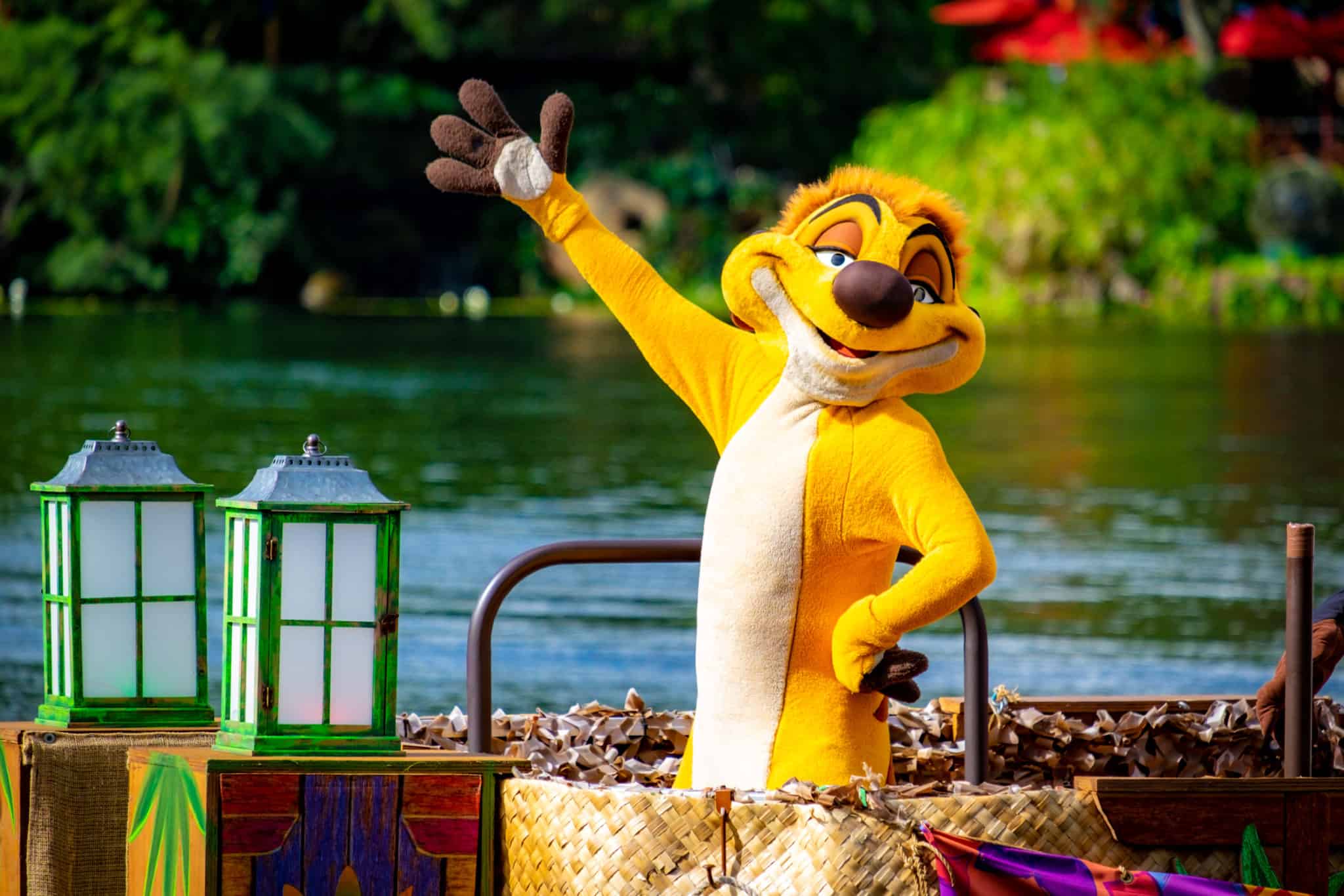
Character meets at Animal Kingdom often feature conservation-themed characters — Timon, Rafiki, and safari-clad Donald and Daisy.
Photography Tips
Animal Kingdom is a photographer's paradise and most guests don't bring enough battery life to do it justice. Bring a portable charger. The optimal photography window is the first 90 minutes after opening: golden light, active animals on the safari, and lower foot traffic on every trail.
For the safari, a zoom lens or telephoto setting on your phone dramatically improves animal shots — some subjects are 50–100 feet away. For Pandora at night, tripod or very steady hands: the bioluminescent light is beautiful but low, and movement shows. The Tree of Life reads best from a distance — cross the bridge to Discovery Island's western side for the full-width shot.
📸 Golden Hour Note: Animal Kingdom faces mostly east, which means afternoon light hits the Tree of Life beautifully — warm, dramatic, long shadows. The late afternoon safari also catches stunning golden light across the savanna habitats.
Why Animal Kingdom Stands Apart
Every Disney park tells a story, but Animal Kingdom's story is actually real. The conservation mission isn't a marketing line — the park houses over 300 animal species, partners with global wildlife organizations, and has contributed directly to several breeding and reintroduction programs. When you watch that giraffe walk past your safari truck, it's walking past because the habitat supports it, not because it's on a track.
That authentic connection is what makes Animal Kingdom the park guests most often describe as their favorite — not for individual attraction rankings, but for the feeling it creates. It's slower, richer, and more surprising than any other place at Walt Disney World. Give it the time it deserves.
Plan Your Perfect Animal Kingdom Day
Use our Animal Kingdom one-day itinerary to optimize every hour — rides, dining, character meets, and the best times for the safari.
View the Full Itinerary →